
10 Key Productivity Hacks for Startup Entrepreneurs
Do you ever find yourself overwhelmed by countless responsibilities as you launch your venture? Embarking on the path of entrepreneurship brings thrilling opportunities, yet it is accompanied by numerous obstacles that test your resolve. As a budding business owner, you probably manage a wide array
Do you ever find yourself overwhelmed by countless responsibilities as you launch your venture?
Embarking on the path of entrepreneurship brings thrilling opportunities, yet it is accompanied by numerous obstacles that test your resolve.
As a budding business owner, you probably manage a wide array of duties—including promotion, accounting, and client interactions—all while striving to preserve your mental equilibrium.
This is precisely why honing skills in efficient time allocation and output optimization becomes essential for overcoming these obstacles and maintaining momentum.
To support your progress in this entrepreneurial adventure, we present ten actionable, research-supported strategies designed to sharpen your concentration and deliver tangible improvements in your daily operations.
1. Harmonize Full-Time Work and Side Projects Through Smart Scheduling
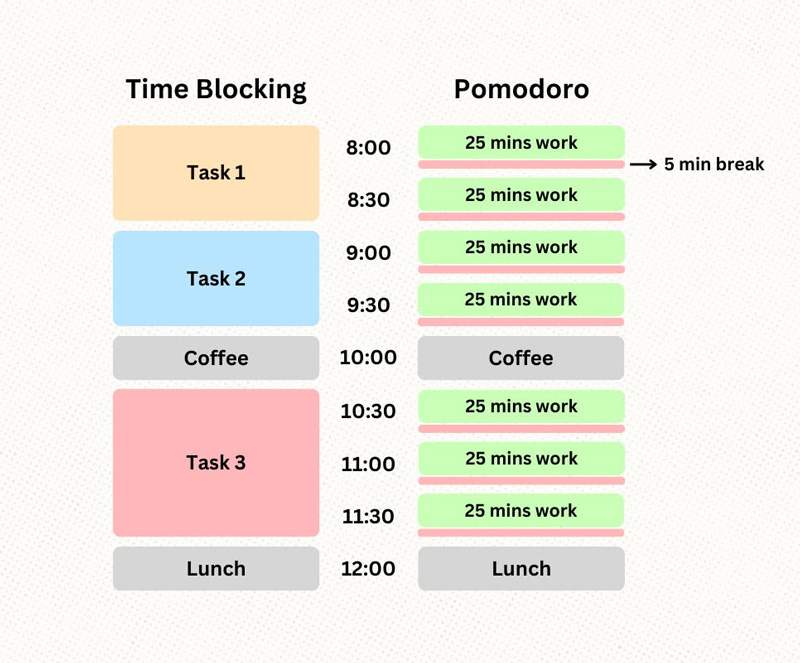
Countless business starters begin their endeavors alongside a traditional employment, and coordinating these commitments can prove daunting. Nevertheless, integrating two proven methodologies—Time Blocking paired with the Pomodoro Method—can render this balance achievable and sustainable.
Let us delve into the mechanics of each approach and uncover the reasons they synergize so effectively.
Time Blocking
Time Blocking entails dividing your daily hours into distinct segments, each allocated to particular activities. Envision it as formulating a financial plan, except applied to your hours rather than currency. This strategy guarantees reserved periods for your primary occupation and entrepreneurial pursuits, allowing undivided focus on each.
The Pomodoro Technique
The Pomodoro Technique entails engaging in concentrated work intervals, usually lasting 25 minutes, succeeded by brief 5-minute pauses. This practice counters the productivity drain caused by frequent task shifts. It sustains your attention span and vitality across extended work periods.
When merged, these tactics furnish a potent framework for sustained efficiency. They diminish the urge to multitask, curb interruptions, and incorporate essential recovery moments. Consequently, you remain alert and sidestep exhaustion throughout your waking hours.
Now, consider practical steps for integrating this duo into your routine:
- Employ Time Blocking to outline your day, designating precise intervals for various responsibilities. Ensure you allocate specific windows for your side venture amidst your regular job timetable.
- Inside every allocated block, apply the Pomodoro Technique: dedicate 25 minutes to intensive effort, followed by a 5-minute respite. Customize the durations to suit your preferences; certain individuals thrive with extended sessions that foster deeper immersion.
- Conclude your day with a brief reflection on successes and areas for refinement. Leverage these observations to refine your method iteratively, continually elevating your effectiveness.
2. Establish a Disciplined Daily Framework After Leaving Your Job
Shifting from a conventional 9-to-5 routine to the autonomy of self-employment can disrupt your sense of order. Absent a clear structure, it becomes effortless to veer toward lesser priorities and squander valuable hours.
A robust method for crafting a disciplined agenda involves distinguishing preparatory planning from active execution. Achieve this separation via a conceptual framework known as “The Pilot, the Plane, and the Engineer.”
Here is a detailed breakdown of its application.
The Pilot
Begin as The Pilot, charting your daily trajectory. Allocate approximately 10% of your time to this function, determining primary focuses. This might occur over your morning brew, offering a broad overview of the day's priorities.
The Plane
Transition to The Plane mode for roughly 85% of your hours. Here, your sole responsibility is implementing the Pilot's blueprint without second-guessing, adhering steadfastly to the path, and resisting diversions.
The Engineer
Reserve about 5% of your time for The Engineer role, tasked with system upkeep and enhancement. This encompasses calendar organization, file management, or skill refinement such as faster typing, which cumulatively heightens long-term efficiency.
The Pilot safeguards the relevance of your efforts. The Plane amplifies output volume. The Engineer streamlines the entire operation for optimal speed.
3. Develop a To-Don’t Inventory
Although a traditional to-do list tracks essential accomplishments, a To-Don’t List conversely catalogs activities to evade deliberately.
View it as your individualized prohibition area, targeting time-consuming behaviors, output saboteurs, or elements detrimental to your welfare.
Scientific inquiry reveals that self-control is finite. Each choice, such as forgoing a sweet treat or bypassing social platforms, depletes cognitive reserves.
By preemptively curating a To-Don’t List, you circumvent ongoing willpower struggles. Pre-decisions conserve reserves for pivotal pursuits.
Crafting your list requires weekly introspection: scrutinize routines to pinpoint drags or misalignments. Examples include “Refrain from social media until midday” or “Eschew task juggling on critical assignments.” Display it prominently for constant reinforcement.
Launch with these five foundational entries:
- Multitasking: Frequently equates to mediocre execution across multiples. Prioritize singular focus.
- Acquiescing to every request: Rapidly erodes schedule sovereignty. Politely decline non-strategic solicitations.
- Prolonged gatherings: Prime time sinks. Convene only when indispensable, and abbreviate durations.
- Frequent inbox monitoring: Fractures concentration. Limit to thrice or fourfold daily.
- Dawn device browsing: Primes distraction. Redirect inaugural hour to fruitful or contemplative pursuits.
Echoing Idowu Koyenikan, “Your attention dictates your time investment.”
4. Apply the Pareto Principle
In 1906, Vilfredo Pareto observed a peculiarity amid garden tending: roughly 20% of pea pods yielded 80% of the harvest. Intrigued, he examined Italian land ownership, discovering 20% controlled 80%. This epiphany unveiled a ubiquitous pattern.
In commerce, 20% of patrons might furnish 80% of earnings. In programming, remedying 20% of defects resolves 80% of glitches. Variations abound.
Precise figures vary, yet the essence persists: vital outcomes stem disproportionately from select inputs.
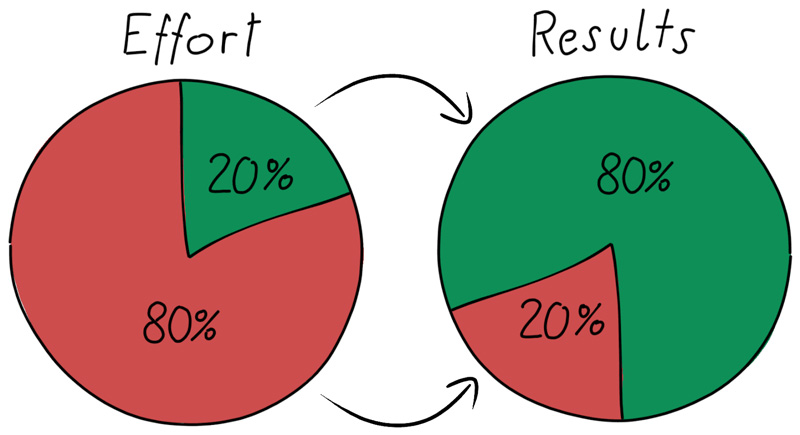
To elevate output, target the 20% of endeavors yielding maximal returns.
From a ten-item agenda, addressing two pivotal ones (20%) could yield 80% impact—completing a cornerstone initiative or key consultation. Bypass overwhelm by prioritizing these for swift, substantial progress.
This neither dismisses the remaining 80%, which retain value, nor advocates neglect. Rather, it directs amplified endeavor strategically, fostering efficacy and fulfillment in time utilization.
Emphasize intelligence over mere exertion.
5. Harness Delegation and Automation
Novice entrepreneurs often erroneously assume sole responsibility for all duties. This overreach invites exhaustion and suboptimal performance. Gallup research indicates CEOs adept at task distribution experience accelerated expansion and superior revenues versus micromanagers.
Optimize delegation via the Eisenhower Matrix, devised by President Dwight D. Eisenhower for presidential exigencies.
Quadrant 1: Urgent and Important (Tackle Immediately)
These demand instant action, such as impending deadlines. Reserve calendar space accordingly.
Quadrant 2: Important but Not Urgent (Schedule Diligently)
Vital for enduring advancement sans pressure, like skill augmentation courses. Book recurring slots.
Quadrant 3: Urgent but Not Important (Outsource)
Pressing yet peripheral, such as routine correspondence. Transfer to capable hands.
Quadrant 4: Neither Urgent nor Important (Discard)
Irrelevant to objectives; minimize or eliminate, e.g., workplace social scrolling. Deploy blockers or timers.

The Power of Automation
Beyond offloading and excision, automation liberates hours from drudgery, redirecting to high-value strategy.
Tim Ferriss in The 4-Hour Workweek extols automation's role in workload contraction and output amplification, centering on essence.
Platforms like Zapier, IFTTT, and HubSpot manage rote functions: auto-replies, posts, follow-ups.
Extend automation domestically for amplified business bandwidth:
- Configure auto-payments for services.
- Opt for delivery groceries.
- Adopt robotic cleaners.
- Subscribe essentials.
- Automate bookings.
- Template communications.
- Smarten habitat: lights, climate, purifiers.
Perfection demands experimentation; initiate modestly, assess, iterate.
6. Welcome Failure as a Teacher
Pancake makers recognize inaugural flapjacks seldom excel—pan inadequately heated, mix off, or designated tester.
Culinary lore dubs this the “First Pancake Theory”: initial ventures at novelty often falter.
Entrepreneurially analogous: nascent tasks or client engagements may stumble. Embrace messiness.
Failure aversion plagues, yet reframing debuts as trials transmutes to wisdom. Flawed inaugural does not doom series; integral to mastery.
This resonates with John C. Maxwell’s Failing Forward “fail fast, fail forward” ethos, promoting swift iteration, befriending flops as progress ladders.
7. Foster a Growth Mindset
Fixed mindset posits innate, immutable traits: intellect, problem-solving.
Growth mindset, per Carol Dweck, asserts cultivability via diligence, study. All competencies improvable.
Talent acknowledged, yet boundless potential via commitment.
Charisma deficit? Study it. Finance woes? Course, mentor. Tech gaps? Tutorials, experts.
Entrepreneurship thrives on this conviction: deficits morph opportunities, trials expansion avenues.
8. Inject Playfulness into Operations
Venture stewardship challenges, yet monotony unnecessary. Feel-Good Productivity posits fun elevates invention, drive, wellness.
Neuroscience concurs: play triggers dopamine, enlivening toil, sparking innovation.
Infuse via “Three Avenues to Fun”:
- Query: “How to render this playful?”
- Quest-ify aims.
- Challenge self.
Avenue 1: Query “How to Render This Playful?”
Draining duty? Pose the question. Relocate café-side, soundtrack favorites, gamify. Alterscape, enlist ally, incentivize completion.
Engagement surges, tedium yields.
Avenue 2: Quest-ify Aims
“20% client surge” becomes “New Allies Quest.” “15% cost cut”? “Savings Hunt.” Gamification mindset-shifts drudgery to adventure.
Avenue 3: Challenge Self
Gamify: rival peers, target (30 contacts/10hrs), Seinfeld streaks for continuity.
Accountability, triumph propel persistence.

9. Engage Coworking to Combat Solitude
Solo startups breed isolation, eroding psyche, zeal, output.
Counter via coworking: camaraderie, networks, ambiance refreshment sustains focus.
Social facilitation underpins: peers amplify performance, per Robert Zajonc.
Remote? Virtual hubs mimic accountability sans commute.
10. Prioritize Self-Care to Sidestep Burnout
Venture demands intensity; self-preservation vital for endurance. Nonstop illusion breeds collapse.
Target triad: corporeal, communal, cerebral.
Physical Self-Care
Bodily stewardship optimizes cognition via mind-body nexus.
Food
Nourishment profoundly sways neural vitality via gut-brain dialogue. Focus lapses? Dietary audit.
Western fare—scarce produce, fat/salt/sugar-laden—impairs cognition, risks dementia.
Counter: Mediterranean bounty—fruits, veggies, grains, nuts, seafood, oils, legumes, etc. Shields diabetes, malignancy; turbocharges recall, averts decay, hones mentation. Brain's elite combustible.
Sleep
Slumber profoundly elevates output. 4,000-worker analysis: deprivation slashes efficacy, safety; $1,967/worker toll. Overwork culprit.
Paradox: rested achieve more. Dr. Matthew Carter, Ariana Huffington affirm rest reinforces triumph.
Exercise
Locomotion surges BDNF for erudition, retention. Reactive sports (badminton) outperform repetitive (jogging).
Variety: team sports, stands, ambles, stretches. Katy Bowman: movement manifold.
Social Self-Care
Innate connectivity imperative. Schedule kinships: brews, cohorts, evenings. Micro-interacts suffice.
Mental Self-Care
Mindfulness, meditation fortify resilience, acuity. Daily rituals: logs, thanks, pursuits.
Attaining Life-Work Equilibrium
Self-nurture equilibrates. Wheel of Life visualizes: health, vocation, bonds, evolution, wealth, leisure spokes.
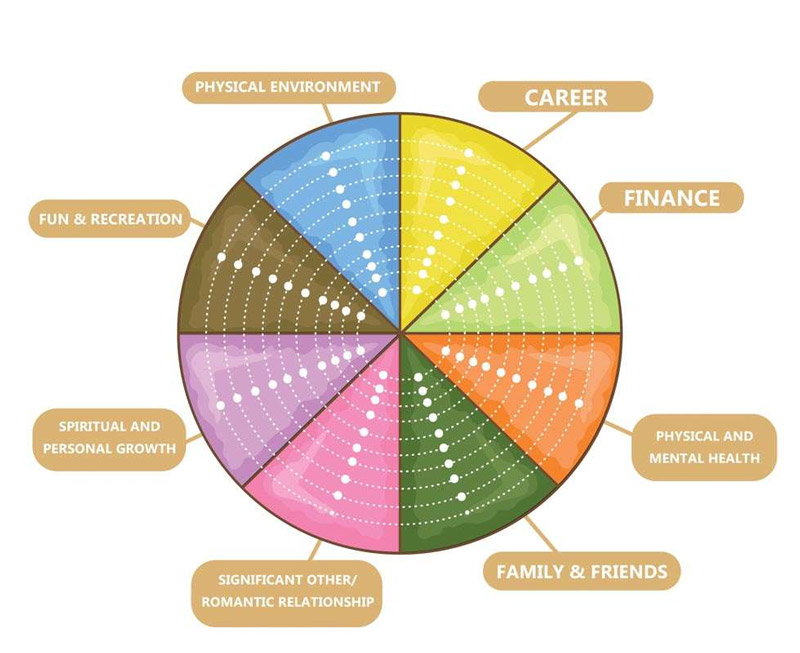
Imbalanced? Bumpy roll. Assess 1-10, chart:
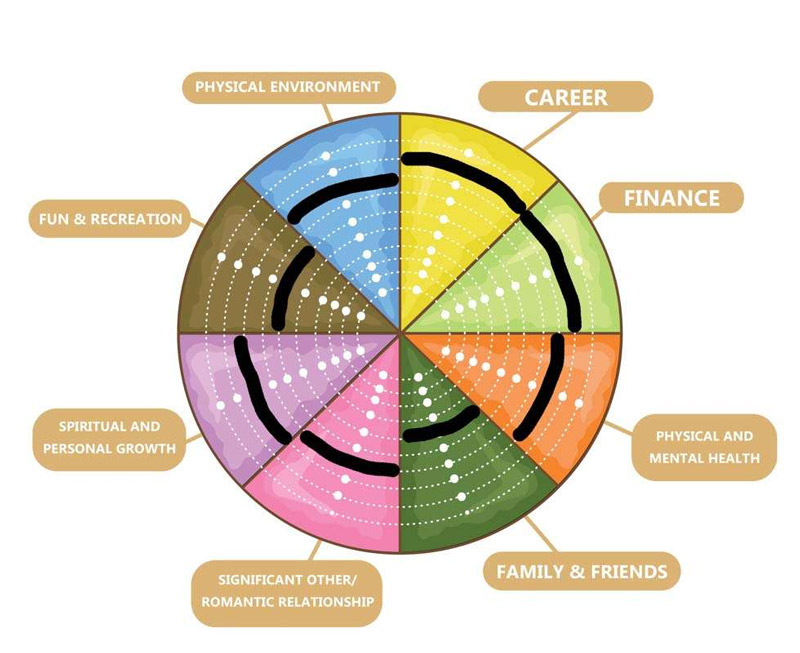
Lows spotlight growth zones. Nurture all for seamless progression.
Assembling Your Productivity Arsenal
Startup frenzy intimidates, yet these ten stratagems enable astute navigation, burnout evasion, goal attainment.
No wholesale adoption mandated; toolkit test, tailor via empirics for personalization.
Subscribe to the newsletter
Join 50,000+ others who get our content first. No spam, ever.