
Can University Leaders Guide America Through Crisis?
Universities across the United States are grappling with significant pressures, including widespread protests, budgetary constraints, and direct political meddling from the federal government. Beverly Daniel Tatum serves as the president emerita of Spelman College and is the author of the highly acc
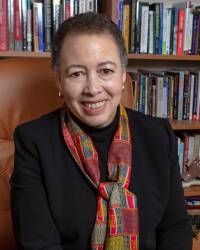
Universities across the United States are grappling with significant pressures, including widespread protests, budgetary constraints, and direct political meddling from the federal government.
Beverly Daniel Tatum serves as the president emerita of Spelman College and is the author of the highly acclaimed book, Why Are All the Black Kids Sitting Together in the Cafeteria? And Other Conversations About Race. Her latest publication, Peril and Promise: College Leadership in Turbulent Times, presents compelling real-world stories of educational administrators who effectively navigated these obstacles, ultimately reshaping their institutions for the better.
Leveraging her extensive background as a psychology professor in higher education, a board trustee, and a college president, Dr. Tatum provides a comprehensive examination of the contemporary landscape in postsecondary education. Her insights span a wide array of issues, from safeguarding free expression amid campus demonstrations related to the War on Gaza to strategically redirecting Spelman College's funds in 2012 toward an expansive wellness program that replaced competitive varsity athletics with inclusive fitness opportunities for the entire campus community.
In a detailed discussion about her recent book and the role of leadership in navigating modern chaos, we explored practical strategies for steering through these difficult periods. What follows is a condensed and clarified version of that exchange.
Progress in National Discussions on Race Over the Past 25 Years
Hope Reese: Your groundbreaking 1997 book, Why Are All The Black Kids Sitting Together in the Cafeteria, marked a pivotal moment. Over 25 years on, how has the broader societal dialogue on race evolved?
Beverly Tatum: The demographic landscape of the U.S. has shifted dramatically since 1997, with substantial influxes of immigrants from countries such as India and China, alongside rapid growth in the Hispanic community. Currently, the overall population is roughly 50% white or slightly under, while school-aged children from communities of color now represent the majority.
The tragic events of September 11, 2001, ushered in subsequent wars and the severe economic downturn of 2008. These crises—marked by economic insecurity and international conflicts—created an environment where engaging in open conversations about race became exceedingly challenging.
Advancing to Barack Obama's presidential victory, many viewed it as the fruition of decades-long civil rights struggles. However, the backlash was intense, manifesting in the rise of the Tea Party, overt racial targeting of Obama, his wife, and their family. This momentum carried into Donald Trump's presidency, where his campaign launch immediately invoked racially charged imagery. These developments have intensified the difficulty of racial discourse, mirroring the deep divisions fracturing the nation.
The Impact of George Floyd's Murder Amid Shifting Political Winds
HR: Layered on top of leadership transitions and ongoing wars was the shocking murder of George Floyd.
BT: Absolutely. Following Trump's initial election, discussions around race sharply declined. Even during his first administration, directives from the federal level discouraged conversations on race and concepts like privilege, with specific terminology effectively banned. Yet, the visceral horror of George Floyd's killing—broadcast ubiquitously via social media on personal devices—sparked a profound national reckoning with racial realities and heightened consciousness.
Consequences of Attacks on Diversity, Equity, and Inclusion Programs
HR: Former President Trump has aggressively targeted diversity, equity, and inclusion (DEI) efforts on college campuses. What tangible impacts are emerging from this?
BT: Early in his term, Trump enacted an executive order opposing DEI. A particularly disheartening response has been the excessive caution displayed by many colleges and universities in adhering to it. Institutions are loath to draw scrutiny, leading to frantic revisions: scrubbing DEI references from websites, rebranding or dismantling programs entirely. Dedicated offices for diversity, equity, and inclusion have vanished in some places, either reorganized under new names or outright eliminated.
This retreat carries serious repercussions. Consider a staff member from a DEI office reassigned to, say, the Dean of Undergraduate Studies. Students facing exclusion or marginalization on campus may struggle to locate and access support. Affiliated groups like Black Student Unions, previously funded through student affairs divisions for events and programming, now face budget cuts, forcing students to self-fund—a heavy additional load that undermines their sense of community and belonging.
The fear of hefty penalties, accreditation threats, or investigations has chilled initiatives, especially at public universities, profoundly affecting the daily experiences of students.
Classroom Dynamics Under Political Scrutiny
HR: How has this filtered down to the classroom environment?
BT: Faculty now operate in an atmosphere of apprehension. Restrictions on permissible topics threaten core principles of free speech and academic freedom. In states like Georgia, legislation prohibits instruction on so-called “divisive concepts.” But what qualifies as divisive? Discussing the historical context of the Confederacy in an American history class challenges entrenched narratives—is that off-limits? There are documented instances where upset students have reported professors, leading to their removal from classrooms on grounds of legal violation. This creates an erratic, intimidating climate for teaching. Honestly, in certain states today, I doubt I could deliver my “psychology of race” course without risk.
Overcoming Resistance to DEI and Fostering Inclusive Campuses
HR: What fuels such strong opposition to DEI, and how can higher education institutions advance these principles?
BT: Bold, visionary leadership is essential. We must reposition the narrative. The acronym DEI itself provokes unease for some; “diversity” can make white, male, heterosexual individuals feel sidelined. Yet diversity truly encompasses all. The onus lies with us in how we've allowed the terminology to drift—often using “diverse” as a euphemism for racial or ethnic minorities, like implying a “diverse” candidate means a Black applicant. Clarity in language matters: just state it directly.
Inclusion remains paramount. People instinctively seek representation in images or narratives; its absence breeds alienation and self-doubt, a common plight for marginalized groups on campus. Leaders should probe: Who is absent from our shared vision? They can cultivate belonging through personal modeling—mindful speech, inclusive examples—and decisions in hiring and resource allocation.
To boost STEM engagement among students of color, for instance, campuses could fund faculty training in inclusive teaching methods from recognized experts. Establishing a lecture series featuring prominent diverse STEM figures would provide inspiration. Recognizing and resourcing effective mentors of underrepresented students underscores institutional priorities. Additionally, bridging alumni with current students via targeted events elevates visibility for these communities.
Managing Campus Polarization and Protests
HR: With extreme divisions manifesting in protests, such as those over the War on Gaza, how should colleges respond?
BT: Facilitating dialogue is key. Campuses must nurture a culture where respectful exchange is the norm. Certain institutions excelled during Gaza-related unrest; notably, a Jewish student and a Palestinian American student launched Atidna—a group embodying “our future” in Hebrew. They built a forum for pro-Palestinian and Jewish students to engage constructively, largely independently, but it exemplifies a replicable approach.
University presidents can amplify such efforts by providing resources, attending events, and demonstrating commitment. True leadership involves empowering senior staff, students, and faculty—not monopolizing the stage but modeling disagreement, granting space for dissent. Students deserve platforms for their voices; overreactions erode trust.
Spelman College's Bold Wellness Shift and Its Outcomes
HR: In 2012, as Spelman's president, you redirected NCAA athletic funding toward a comprehensive wellness initiative. How did that unfold, and what key takeaways emerged?
BT: Intercollegiate sports weren't central to student life at Spelman—games drew sparse crowds, and participation was low. This made reallocating funds logical, though not without pushback; varsity athletes were upset, and misconceptions about nonexistent NCAA scholarships fueled confusion.
The pivot's triumph hinged on communication strategy: emphasizing gains over losses. The redirected budget enabled a wellness program accessible to every student, addressing critical health needs like sedentary lifestyles disproportionately affecting Black women. Offerings expanded to yoga, meditation, and sound healing. The overriding lesson? Effective messaging transforms controversy into consensus.
Navigating the Rise of Artificial Intelligence in Higher Education
HR: AI has rapidly permeated college settings. What's your perspective?
BT: The pace of adoption is staggering. By spring 2023, faculty debates centered on curbing cheating. Now, the focus has matured to teaching ethical AI use. Everyone must adapt swiftly, prioritizing faculty training to integrate AI productively for student benefit.
More profoundly, AI disrupts employment landscapes. Society must grapple with displaced workers. Colleges are ideally positioned to probe humanity's essence amid machine dominance: What irreplaceable human skills endure? Critical thinking, problem-solving, empathy, compassion—these define us.
Mastering dialogue fosters empathy and shared understanding—capacities AI has yet to replicate. In this precarious era, no setting surpasses a university for such vital exploration.
Subscribe to the newsletter
Join 50,000+ others who get our content first. No spam, ever.