
Does Brain Pacing Unlock Parkinson’s Law?
Parkinson’s Law famously declares that work tends to expand in order to occupy all the time allotted for its completion. This principle was first introduced by British naval historian C. Northcote Parkinson in a humorous 1955 article published in The Economist. While it might seem absurd when interp
Parkinson’s Law famously declares that work tends to expand in order to occupy all the time allotted for its completion. This principle was first introduced by British naval historian C. Northcote Parkinson in a humorous 1955 article published in The Economist. While it might seem absurd when interpreted at face value, merely imposing a deadline does not magically render a task completable within that specific period.
Numerous studies in academia contradict this notion directly. The planning fallacy, for example, highlights the common pattern where intricate projects frequently exceed their budgets and timelines. In reality, the situation aligns more closely with Hofstadter’s Law, formulated by Douglas Hofstadter, which wryly observes that tasks invariably take longer than anticipated, even after factoring in this very delay principle.
Although Parkinson’s Law lacks solid empirical backing as a true scientific law, it nonetheless reveals a profound aspect of human behavior: relaxing time pressures often leads to the duration required for a task stretching out to utilize much of the extra available time.
Energy Dynamics, Pacing Strategies, and Human Endurance Boundaries
Reflections on Parkinson’s Law surfaced while delving into Endure, Alex Hutchinson’s insightful book that explores the boundaries of human stamina and the ongoing debates in science regarding those limits’ precise mechanisms. Hutchinson, a accomplished endurance competitor in his own right, recounts an anecdote from his track and field days when he aimed to surpass his personal record in the 1500-meter event. Despite expending maximum effort, he observed his speed consistently surging only in the race’s closing moments. Attempts to fool himself into maintaining peak velocity throughout failed, as a noticeable slowdown persisted midway through.
Assuming endurance hinges mainly on physiological reserves like muscle glycogen stores, oxygen delivery, and ATP production, this pattern defies logic. If one is truly operating at full capacity, how does a final burst of acceleration become feasible as the finish line approaches?
Hutchinson’s experience was far from unique. Analysis of world-record performances reveals identical trends: a mid-race pace slowdown succeeded by a modest uptick near the conclusion. Even elite athletes, with their rigorous training, iron discipline, and high motivation, appear to reserve some capacity.
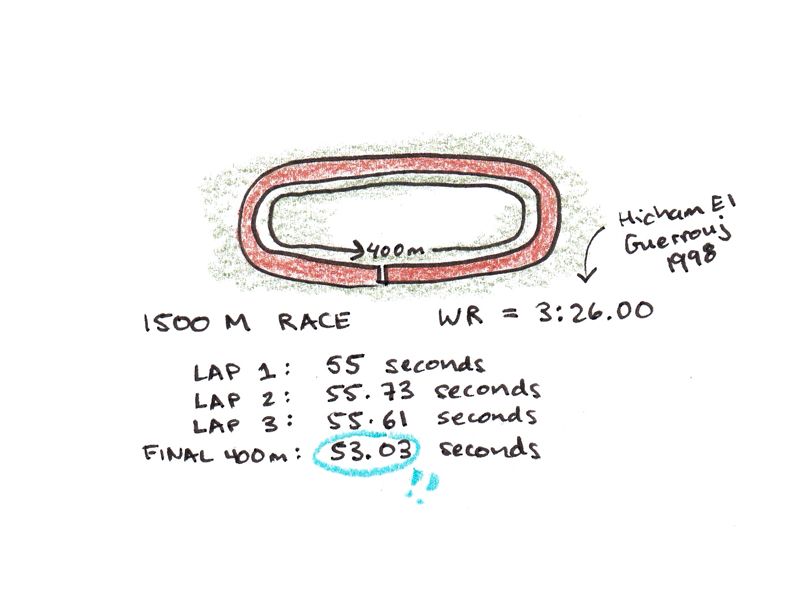
Such observations have convinced certain researchers that endurance constraints stem not from bodily limitations but from cerebral regulation. Athletes like Hutchinson do not hit their ceilings due to absolute physical exhaustion but because their brains impose controls to avert the hazards of true maximal exertion. This built-in safeguard ensures a buffer against injury and preemptively conserves resources for prolonged efforts when the end is not yet in sight.
Interplay of Physical Exhaustion and Cognitive Stamina
The concept of a central governor modulating athletic output aligns well with evolutionary imperatives. Pushing to the point of muscle tears, vascular ruptures, or cerebral oxygen deprivation renders any record-breaking achievement irrelevant in survival terms.
But can analogous mechanisms apply to cognitive weariness? After all, no one’s mind suffers oxygen starvation from overcoming procrastination habits.
Intriguing connections exist between bodily and intellectual fatigue. Individuals tackling demanding cognitive exercises before a cycling endurance trial quit sooner than those skipping the mental preload. Physical activity generally boosts brain function, yet cognitive output declines when multitasking with exertion.
Certain experts propose that bodily and mental exhaustion represent manifestations of a singular phenomenon. Although distinct elements exist—such as drowsiness or limb feebleness—a unified fatigue factor appears to bridge physical labor and cerebral endeavors.
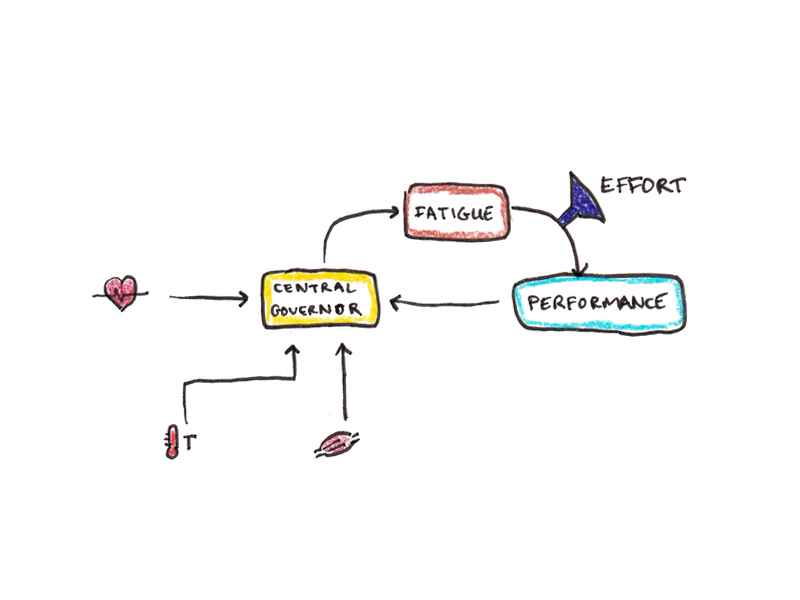
The precise role of mental fatigue remains under investigation. It might mirror physical fatigue by monitoring physiological markers like energy reserves, accumulated micro-sleep deficits, or elevated stress chemicals.
Alternatively, fatigue broadly—and mental fatigue in particular—could serve as a deterrent against pursuing low-value objectives. Prolonged engagement in unrewarding, non-instantly gratifying pursuits triggers escalating weariness. This sensation might function as a universal signal urging task switches, shielding the body from athletic overstrain and the mind from fixation on dull or pointless endeavors.
Regardless of the underlying driver, both forms of fatigue yield comparable outcomes: they dial back output to forestall immediate overload and prepare for upcoming needs.
Achieving Greater Output Through Reduced Work Duration
This discussion underscores a cornerstone of energy stewardship: aligning efforts with innate cycles of exertion and rejuvenation. Continuous labor leads to burnout, but alternating deep concentration bursts with full recuperation counterintuitively yields higher accomplishments in shorter spans with diminished drain.
This insight is hardly novel; productivity research has long documented enhanced results from confining work within biological cadences. Pioneering studies by H. M. Vernon demonstrated that trimming workweeks from the prevalent 70-80 hours maintained or boosted yields. Contemporary approaches, such as Cal Newport’s fixed-schedule methodology, echo this by accomplishing substantial volumes in constrained hours—a bedrock of self-improvement advice.
Fatigue science introduces a compelling layer to these observations. If task investment reflects not raw cognitive reserves but a brain-orchestrated pacing tactic for sustainable completion, it clarifies why grueling, unrelenting timetables often diminish rather than elevate output.
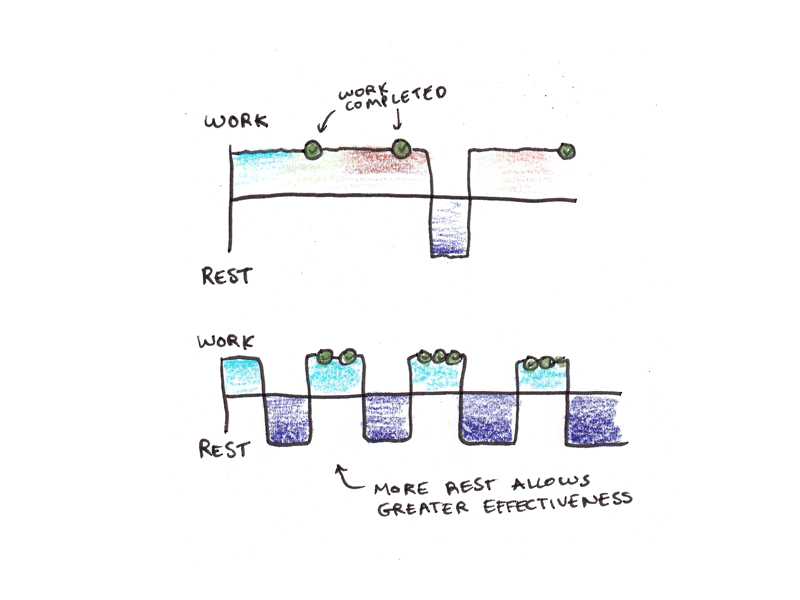
Foreseeing inadequate recovery, the mind subconsciously curbs effort deployment. This might manifest as diminished intensity on the core task, settling for subpar results, or veering into delay, idleness, or fiddling with minor, low-stakes work elements.
Consequently, the timeline to meet quality benchmarks lengthens, mirroring the expansion Parkinson lampooned in his essay.
Defining Effective Energy Stewardship
At its core, energy management transcends mere equilibrium or compromises between wellness and labor. It embodies the truth that peak performance thrives amid balanced work-rest oscillations.
Cultural narratives frequently frame this as an either-or battle: relentless grinders versus fragility-prone souls needing stress insulation. Partisans duly rally to one camp, vilifying the other.
Yet the evidence compiled here dismantles this binary. Substantial endeavors, rhythmic exertion-recovery patterns, and vitality-sustaining practices like quality sleep, nutrition, and fitness form an integrated approach. Far from mere hard-work enablers, they underpin a fulfilling existence.
Subscribe to the newsletter
Join 50,000+ others who get our content first. No spam, ever.