
Healing Power of Burlesque for Dancers' Well-Being
Kellita Maloof began her dance journey at a young age. However, it was only during her recovery from a severe flare-up of ulcerative colitis—a chronic autoimmune condition impacting the digestive tract—that she truly recognized the profound gifts dance had bestowed upon her. Surprisingly, it wasn't
Kellita Maloof began her dance journey at a young age. However, it was only during her recovery from a severe flare-up of ulcerative colitis—a chronic autoimmune condition impacting the digestive tract—that she truly recognized the profound gifts dance had bestowed upon her. Surprisingly, it wasn't the classical ballet she had pursued as a teenager, but rather burlesque, which she encountered in her thirties, that provided this revelation.
Maloof, who launched the Hot Pink Feathers burlesque troupe in San Francisco back in 2000, reflects, "I first delved into burlesque practice 25 years ago, and it required a full decade before I even grasped the essence of my actions." She elaborates further on her transformative experience:
During that period of rehabilitation, I experienced an unprecedented depth of introspection, something rarely accessible to most individuals due to life's demands. That's when it clicked for me—how deeply I had been utilizing burlesque. Within a burlesque performance, I cultivate complete presence and association with the moment. Instead of adhering rigidly to predefined choreography, I constantly check in with myself every second, every instant: 'Am I truly here? Am I fully embodying my physical form? Am I making deliberate, conscious choices right now, in this shared space with these people? Do I consent, and does it bring me genuine joy and delight to unveil the next layer?'
Maloof's story is far from isolated. Countless women have shared personal narratives about turning to burlesque as a pathway to improved self-perception, and an expanding collection of scientific studies now supports these accounts.
Burlesque traces its roots to ancient Greek satirical theater, blending elements of dance, music, and parody. It serves to both honor and satirize sexuality, employing exaggeration and ridicule to challenge societal norms and expand cultural boundaries.
As noted by Julia Persky, an assistant professor at East Texas A&M, this art form has historically provided entertainment and respite for working-class and marginalized communities through its theatrical spectacles, spanning centuries.
Upon arriving in America during the 19th century, burlesque evolved to incorporate striptease and various exotic dance styles. It has undergone multiple revivals and reinterpretations, culminating in the emergence of "neo-burlesque" around the mid-1990s.
Historian Betsy Golden Kellem observes that neo-burlesque has revitalized many of its traditional elements, captivating predominantly female, often queer audiences. It celebrates diverse body types, playfully subverts gender roles, critiques power dynamics, and fosters both enjoyment and personal growth. Notably, this modern iteration is largely created and performed by women and femme-identifying individuals, primarily for similar audiences.
Extensive research underscores the therapeutic advantages of dance and movement therapies in trauma recovery. Yet burlesque distinguishes itself by centering on the sexual and sexualized female form, enabling performers to explore not just its conceptual significance but its embodied sensations, according to Jacki Willson, an associate professor of performance and gender studies at the University of Leeds in the UK, who has extensively researched the genre.
Burlesque creates a secure environment for trauma recovery by promoting self-determination, consent, self-love, and compassionate self-care, Willson explains. It navigates the delicate boundary between misogyny and sexual empowerment, between exploitation and authentic ownership. Through specific performance techniques, props, and archetypal personas, it equips both performers and viewers with fresh insights into reclaimed power and a repertoire of dramatic strategies for its restoration.
It's essential to note that not all participants seek burlesque for healing purposes, nor do all instructors frame it as such. Some, like Maloof in her early years, may not yet recognize or verbalize their underlying traumas—be they acute incidents she terms "boom-boom trauma," such as sexual assault, or insidious, cumulative "drip-drip trauma" originating from childhood attachment issues, leading to a lifelong sense of being overlooked.
This realization inspired Maloof to formalize her teachings since 2010 under the banner of conscious burlesque. "One can intentionally approach it as a return to one's true self," she asserts. "In every session, participants explore, 'What does it feel like to inhabit my own being?' I repeatedly guide them to tune into bodily sensations—whether witnessing others or being witnessed—training everyone to return home to themselves in tangible, practical ways."
Ultimately, burlesque affords the rare opportunity to be fully seen and validated, which Maloof identifies as inherently restorative.
Dancing with Yourself
This welcoming embrace explains why burlesque attracts so many from marginalized groups, including LGBTQ+ individuals, Black performers, those with larger bodies, and people with disabilities, viewing it as a sanctuary of acceptance.
In her doctoral dissertation examining Black burlesque artists past and present, Ashley Dunn describes the form as a vital arena where Black women can redefine themselves and resist oppressive societal constraints.
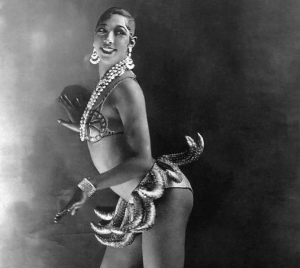
Despite their erasure from mainstream burlesque narratives, Black innovators like Josephine Baker—who embodied Black pride and resistance in the 1920s and 1930s—influenced the genre profoundly. White performers often mimicked their innovative moves. Dunn argues that Black artists have ingeniously repurposed burlesque, transforming a space of historical appropriation into one of healing from racial trauma.
Burlesque's fluid approach to gender expression makes it a natural haven for queer identities, especially amid rising societal hostilities. Research highlights neo-burlesque as a "queer emotional theater," where humor and emotion provide fleeting liberation from daily oppressions. Performances enable a cathartic release, playfully reimagining restrictive structures for both artists and spectators.
Laura C. Westmoreland, a Los Angeles-based therapist, discovered burlesque through icons like Dita von Teese, the undisputed queen of the art. "The sheer diversity among the performers left me in awe," she recalls. "I saw reflections of myself in them."
Private lessons sparked a profound shift in her self-perception. "Suddenly, I was locking eyes with my own reflection—a visceral connection on physical, emotional levels. It was revelatory."
This epiphany drove her doctoral research into recreational burlesque's therapeutic potential. "Women navigate a world demanding mind-body dissociation for safety. Imagine a space for sensual movement where safety and reconnection thrive—what transformations might ensue in our worldview and presence?" Her findings now inform her therapy practice, emphasizing bodily awareness and safety. She envisions integrating burlesque choreography with mental health strategies in future programs.
Burlesque as Community
Kaitlyn Regehr, associate professor of digital humanities at University College London, documented self-esteem gains among women learning burlesque. Her analysis of eight participants from the Canadian reality series "ReVamped"—where women cohabited with a choreographer for six weeks—revealed histories of painful breakups, including abuse.
Regehr concluded that all viewed the training as empowering, boosting self-efficacy. Group practice fostered a secure setting for introspection and mutual emotional support.
Community—offering visibility, reciprocity, acceptance, validation, and belonging—profoundly aids trauma and mental health recovery for anyone.
Jacki Willson emphasizes, "Burlesque embraces all bodies, transcending mere inclusion. Its striptease confronts sexual and gendered traumas inflicted on individuals and communities. This vulnerable act of exposure and critique unfolds in a protective, respectful space that honors each person's inherent value."
Breaking Stereotypes
London's Invisible Cabaret, a burlesque and vaudeville ensemble, challenges mental health stigmas head-on. Performers tackle depression, anxiety, eating disorders, intrusive thoughts, and the necessity of professional help.
Cofounder Rosalind Peters notes, "Nudity on our stage invariably underscores vulnerability—emotional or physical. We curate meticulously to ensure performers feel utterly safe."
Scotland's Bump N Grind troupe members confront daily mental and physical health struggles. Participation alleviates anxiety, depression, and builds confidence, body comfort, and self-realization of capabilities, says Caroline Adkins.
Filmmaker Susan Wolf's 2024 documentary, Learning to Be Naked: The Healing Power of Burlesque, profiles five global women: an amputee and cancer survivor showcasing her prosthesis and scars; a 24-year-old stroke survivor post-childbirth who progressed from wheelchair to stage; and a plus-size, Black, nonbinary queer advocate.
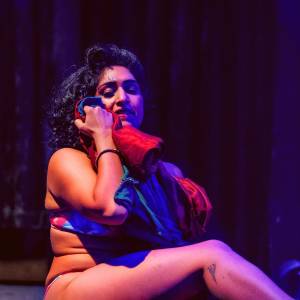
Burlesque provided these women secure healing spaces from trauma and marginalization, while dismantling beauty stereotypes and affirming diverse bodies' visibility for audiences.
Wolf describes burlesque shows as uniquely interactive and supportive, unlike formal dance. "Witnessing performers triumph over traumas to embrace self-love is profoundly validating and uplifting for viewers."
During her study of fat burlesque classes, UCLA assistant professor Yessica Garcia Hernandez observed frequent body image discussions. One student's fat-shaming story sparked dialogues on curve hierarchies, thin-women trauma, dieting culture, and persistent shames.
It empowered her to address personal fat-shaming, reframing it as cultural toxicity rather than individual flaw. In a thin-dominated field, plus-size performers onstage herald progressive possibilities, especially for discouraged students.
Body Diversity
Burlesque aids women grappling with aging-related anxiety, depression, and invisibility in youth-obsessed cultures. Middle-aged and older women, often desexualized, benefit from reclaiming sensuality, per Gemma Collard-Stokes, a University of Derby researcher studying nine women aged 50-84 in recreational classes.
Participants felt severed from their bodies and identities, driven to reconnect and counter inadequacy perceptions.
Supportive validation of sensuality and visibility cultivated positive body images. Collard-Stokes summarizes: Burlesque's sensual focus reawakens bodily movement, expression, and strength, fostering contentment in one's skin. It shifts from disconnection to embodied living. As aging-support arts grow, sensual dance proves invaluable for women's later-life navigation.
Maloof recommends shows or classes for the curious to gauge personal resonances. "Ample research confirms movement and dance heal," she affirms, adding:
What I highlight is proper witnessing—not just physiques, but full personalities and presences. We overlook our profound beauties. Burlesque invites that gaze, enabling self-vision. Biased as I am, it's life's most vital pursuit.
Subscribe to the newsletter
Join 50,000+ others who get our content first. No spam, ever.