
How My Kidney Donation Plan Saved My Life from Cancer
When I submitted my application to the National Kidney Registry for living donation, my goal was to enhance the life of another individual. Little did I imagine that this choice would ultimately preserve my own life. Greater Good Chronicles This collection features personal essays from individuals w
When I submitted my application to the National Kidney Registry for living donation, my goal was to enhance the life of another individual. Little did I imagine that this choice would ultimately preserve my own life.
Greater Good Chronicles
This collection features personal essays from individuals who integrate the principles of a fulfilling life into their everyday experiences.
Several years back, the notion of living kidney donation first entered my mind after my aunt received a diagnosis of kidney disease. Making that choice felt straightforward because I hold her in the highest regard and would willingly offer any part of myself if it could help her. Thankfully, she managed to recover without requiring a transplant, yet the concept stayed with me, resurfacing periodically over the years.
Billboards at a crossroads close to my daughter's high school urged drivers to sign up with the National Kidney Registry to assist a nearby woman in desperate need of a kidney donation. I also came across a compelling video featuring a dedicated husband who paced along the roadside near his residence, clad in a sandwich board sign proclaiming, “NEED KIDNEY 4 WIFE” along with his contact number.
During a flight returning from a speaking engagement, I stumbled upon the documentary titled Confessions of a Good Samaritan in the in-flight entertainment selections. The film, directed by Penny Lane, delves deeply into the procedures, psychological aspects, and ethical considerations of altruistic kidney donation, all while she herself navigates the evaluation process and undergoes the surgical procedure.
Whenever the topic of kidney donation slipped from my conscious thoughts, an unexpected reminder would appear, underscoring that although it had receded from my mind, the urgent demand for living donors persisted. At present, more than 90,000 individuals remain on the transplant waiting list, yearning for word of a compatible donor. For numerous patients, chronic kidney disease translates to ongoing dialysis treatments, persistent health struggles, and significant economic burdens.
The decisive push that propelled me forward arrived unexpectedly through my TikTok feed. The platform's algorithm introduced me to Chandler Jackson, known online as @ChandlerTheKidneyGuy. Chandler himself battles kidney disease and produces content to illuminate the realities of managing chronic illness as a college student.
Watching his videos educated me on the grueling details of his daily peritoneal dialysis regimen: meticulously sanitizing his dormitory room and hands, donning gloves and a mask, preparing the dialysis equipment, connecting the necessary cartridges and intricate networks of tubing, and heating up three enormous bags of dialysis fluid. He repeats the hand sanitizing, gloving, and masking before securing the full apparatus to the dialysis port embedded in his abdomen, initiating a nine-hour cycle where the solution and his peritoneal membrane serve as a makeshift filter to remove the toxins his failing kidneys can no longer process.
By the time I had explored Chandler’s extensive video library, my determination solidified. I committed to donating one of my kidneys in 2026. Direct donation to Chandler might not be feasible owing to logistical and compatibility challenges, but I could provide him with a kidney donation voucher. This would advance his position on the transplant list or initiate a kidney transplant chain in his favor.
In stark contrast to Chandler’s demanding routine, my own daily existence feels far simpler. Much of my time involves delivering talks at schools and community groups on subjects drawn from my published works, including strategies for effective learning, boosting student involvement in education, preventing substance abuse, and effective parenting techniques. When not traveling for engagements or composing at my workstation, I occupy myself with physically demanding outdoor tasks such as removing heavy boulders from my garden beds, caring for my beehives, or chopping firewood for the upcoming winter season. In relative terms, proceeding with kidney donation promised only a modest disruption to my routine.
Admittedly, the process would involve a comprehensive medical evaluation, including an intensive day of assessments at the nearest transplant facility, which is roughly a four-hour drive from my residence. Should I successfully navigate both the physical and psychological evaluations, the procedure itself would entail laparoscopic surgery performed under general anesthesia, followed by a short hospital stay of a couple of days. Full recovery at home would span approximately four to eight weeks, necessitating a temporary pause in my professional commitments.
As a result, one of the initial people I confided in was my speaking agent. She expressed her own fascination with the prospect of organ donation and assured me she would rearrange my booked appearances accordingly. If the screening timeline proceeded as planned, I could potentially schedule the donation amid Vermont’s chilly, overcast winter months, recuperate cozily by my wood-burning stove while knitting, and resume my outdoor pursuits in the garden, woodland areas, and apiary by the arrival of springtime.
Completing the kidney donor registration form proved remarkably straightforward. I finished it on my smartphone in less than ten minutes while awaiting a flight back from a recent speaking gig. Within a few days, a nurse navigator from Mass General Brigham in Boston—my proximate kidney transplant center—contacted me to review the nuances of altruistic kidney transplantation and gather a thorough medical background. Deeming me a promising candidate, she coordinated my initial round of blood and urine analyses via a nearby laboratory and recommended advancing several routine preventive screenings, such as my mammogram and colonoscopy.
For the initial 55 years of my life, my kidneys merited scarcely a fleeting consideration, yet once the testing commenced, they dominated my thoughts incessantly. Were they in optimal condition? Suitable for donation? I had learned that the transplant team would assess and select the healthier, more resilient of my two kidneys for me to retain, prompting whimsical questions like whether I would keep the right or left one. I even pondered assigning them names. Gradually, I began viewing my kidneys as communal assets, ones I was stewarding on behalf of an unknown recipient, which transformed maintaining their vitality into a central focus of my attention.
One week following the collection of numerous blood samples and a full 24-hour urine sample in a sizable orange container, I made the trip to my community hospital for the mammogram. In a lighthearted moment, I snapped a cheerful selfie in the dressing room mirror and shared it on Instagram with an uplifting caption encouraging women to prioritize their mammograms.
The breast care clinic soon notified me that a follow-up mammogram, potentially accompanied by an ultrasound, was necessary. I remained unperturbed, as prior instances had revealed nothing beyond variations in breast tissue density. I arrived at the University of Vermont Breast Care Center prepared for yet another gown, waiting area, and imaging session.
Customarily, these repeat mammograms concluded with reassurances of benign findings related to tissue irregularities, followed by a cheerful dismissal. Thus, when the medical staff requested I remain for an ultrasound, a subtle unease began to emerge. I concealed it by engaging the ultrasound technician in casual conversation about our respective children while she meticulously examined my left breast and surrounding lymph nodes.
Directed to a compact consultation room to await results, my anxiety escalated the moment the radiologist entered bearing a compassionate yet grave demeanor. Full-blown panic ensued. I immediately messaged my husband, who was attending to patients in his clinic several floors above, imploring him to join me at the breast center for a composed, objective perspective on the evidently momentous diagnosis ahead.
As I awaited Tim’s arrival, I nervously fidgeted with my cuticles and surveyed the modest room. That’s when the conspicuously placed tissue box on the table beside my seat caught my eye, signaling the gravity of the situation. Upon entering, Tim spotted it as well, his expression reflecting shared apprehension.
The radiologist explained that imaging revealed a mass in my left breast, exhibiting irregular, spiculated edges highly suggestive of invasive characteristics. An urgent biopsy was essential. Following definitive results, she advised, discussions with a breast surgeon regarding operative interventions could proceed.
Internally, I recoiled—no, this was a misunderstanding. My role was to bestow life upon another, not to deliberate the survival advantages of lumpectomy against mastectomy for myself.
Decades earlier, during another ultrasound that disclosed our unborn child lacked a heartbeat, a parallel wave of surreal denial washed over me. Everything would be alright, I rationalized; our baby would thrive despite this. We would adapt.
In both scenarios, harsh reality dawns gradually. Tim and I clasp hands, converse intently, pose probing questions, and conduct exhaustive research. Over time, I fully absorb the ramifications and contemplate my altered path ahead. Surgery loomed, along with those projected four to eight weeks of recovery—but instead of culminating in the profound satisfaction of extending life to another, it marked my own battle for survival.
Devastation engulfed me, not only for my personal plight but also for the anonymous stranger to whom I had already mentally pledged a portion of my body.
And yet.
And yet.
That proactive mammogram—scheduled six months ahead of my routine timeline—detected my cancer at an early, treatable stage. Subsequent confirmation revealed invasive lobular breast cancer, a subtype notoriously elusive on standard imaging during its nascent phases.
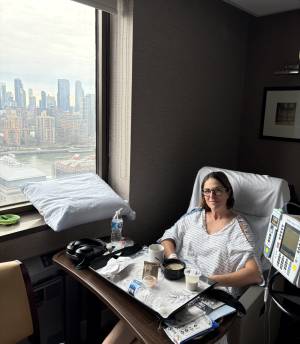
Indeed, I underwent surgery—a bilateral mastectomy incorporating immediate reconstruction—right in the midst of Vermont’s frigid, shadowy winter. I passed December and January nestled by my wood stove, crafting a delightfully imperfect, uneven shawl through knitting. As the soil softens and paths firm up this spring, my healing will progress sufficiently to resume trail jogging, firewood processing, and wrestling colossal rocks from my garden.
Remarkably, Chandler successfully underwent his kidney transplant this winter. While I had to withdraw, another compassionate donor emerged concurrently. She completed the registration, endured stringent medical scrutiny, and donated her kidney effectively. Integrated into a transplant chain, her gift paved the way for her immediate recipient and Chandler Jackson to embrace lives unencumbered by kidney disease.
Though my original impetus for kidney donation stemmed purely from altruism, in a twist as predictable as it is profound, I reaped the very benefits I had intended to bestow upon others.
Subscribe to the newsletter
Join 50,000+ others who get our content first. No spam, ever.